


Homepage › Forums › Customer Experience Management › Transform Your CX Strategy with 7 Essential Steps for Customer Journey Mapping
Transform Your CX Strategy with 7 Essential Steps for Customer Journey Mapping
- This topic is empty.
- AuthorPosts
- September 24, 2025 at 3:44 pm #12299
 Jim FKeymaster
Lately, there’s been a lot of discussion around the difference between customer experience and the customer journey. Many professionals use these terms interchangeably, but they actually describe two sides of the same story.
The customer journey is the path customers take, from discovery to decision, while customer experience is how they feel along that path. When we bring them together through customer experience journey mapping, we can truly understand what drives satisfaction, loyalty, and frustration.
So, what exactly is customer experience journey mapping, and how do you create one that delivers real insights? Let’s unpack the process in seven practical steps that anyone can follow.

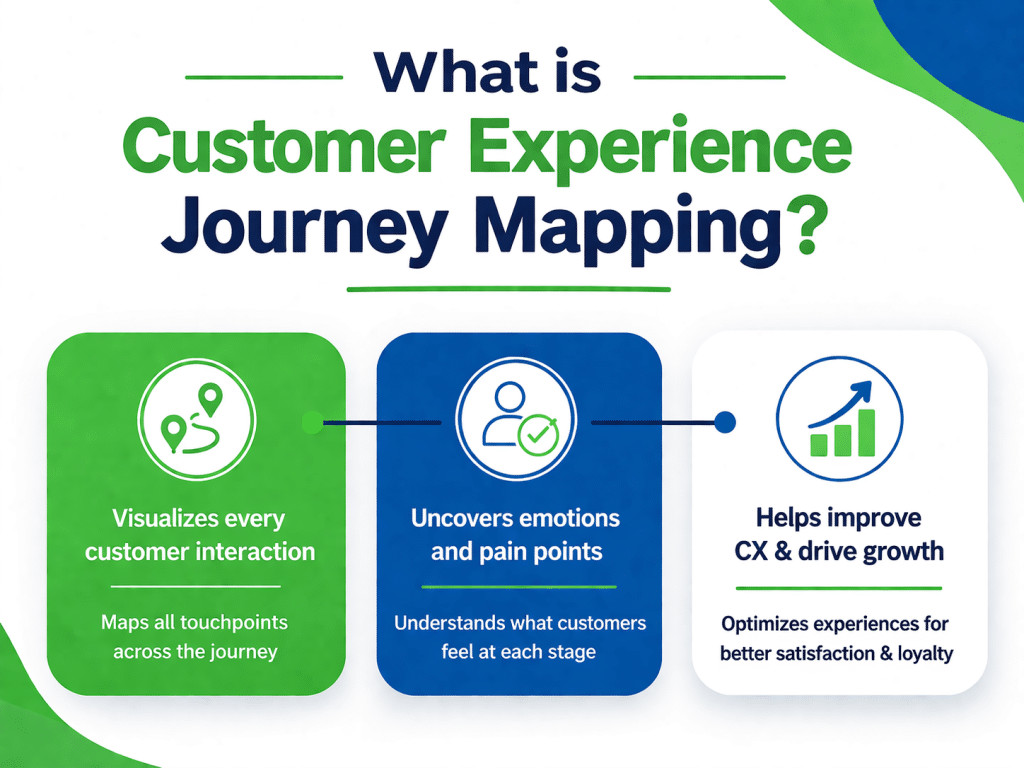
What is customer experience journey mapping?
It’s the process of visualizing every stage a customer goes through when engaging with your business, from discovery to post-purchase support. The map helps you understand what customers think, feel, and do at each step. Unlike simple flowcharts, these maps blend data, emotion, and behavior to show where the experience is thriving and where it needs work.
What is a customer experience journey?
That’s the full path your customer takes, every touchpoint, interaction, and emotion along the way. Customer experience journey mapping turns that path into something tangible and measurable so teams can act on it.
What is the difference between customer experience and customer journey?
The journey is what customers go through; the experience is how they feel while going through it. Mapping connects both, helping you identify emotional triggers, bottlenecks, and improvement points in real time.
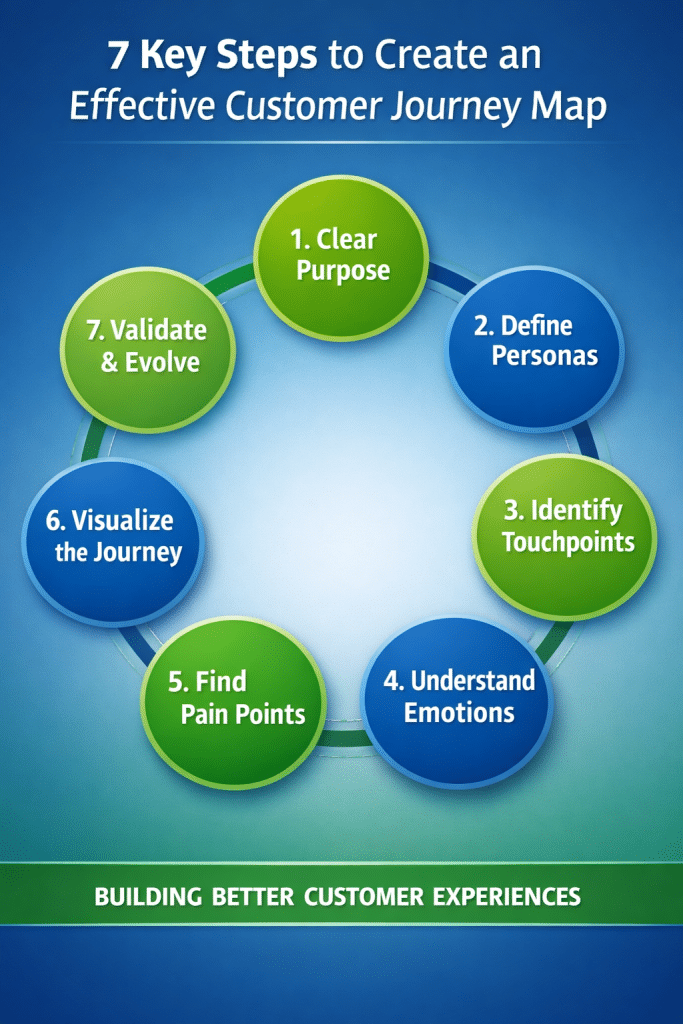
7 Key Steps to Create an Effective Customer Journey Mapping
Building a customer experience journey mapping strategy is a structured way to understand how customers interact with your brand at every stage. It goes beyond basic touch-points and focuses on identifying user needs, emotions, and friction points throughout the entire journey. By using a proper customer experience journey mapping process, businesses can turn scattered data into clear insights that improve satisfaction, engagement, and long-term loyalty. These 7 essential steps will guide you in creating a journey map that is not only informative but also actionable for real business growth and better customer experience outcomes.

1. Start with a Clear Purpose
Before you open any customer experience journey mapping tools, take a moment to ask: Why are we mapping this journey in the first place?
It could be to reduce onboarding friction, improve cross-sell conversion, or increase renewals. The point is, your customer experience journey should always be tied to measurable goals.
Vague ambitions like “improve overall CX” don’t help much. Instead, define specific KPIs — Net Promoter Score (NPS), customer satisfaction (CSAT), or average resolution time — to keep the focus sharp.
When your objective is clear, your map tells a story with purpose. Every touchpoint you analyze becomes part of a bigger mission: to create a customer journey to improve customer experience in a meaningful way.
2. Define Customer Personas Before You Map Anything
Knowing who you’re mapping for matters just as much as what you’re mapping.
When building your customer experience journey, use CRM data, behavioral analytics, and direct feedback to shape realistic personas. These personas shouldn’t just represent demographics; they should reflect motivations, habits, and emotional triggers.For example, a corporate client navigating a SaaS platform may prioritize efficiency, while a retail shopper values ease and reassurance. Understanding these nuances helps ensure your customer experience and customer journey remain relevant and empathetic.
This step is where your insights shift from numbers to people, turning raw data into human stories that guide every decision that follows.
3. List and Connect Every Touchpoint
Once you know your customers, the next step is to map where and how they engage with your brand. Think of website visits, email campaigns, app notifications, chat interactions, and even in-store experiences.
Modern customer experience journey mapping software allows you to visualise these touchpoints dynamically, showing how customers move between channels. Seeing this flow helps you detect friction points, maybe users drop off between app login and checkout, or hesitate before finalising a payment.
This is where mapping the customer experience journey starts to feel powerful: you’re no longer looking at isolated data points, but at an interconnected web of actions and emotions that together define your brand experience.
4. Understand Emotions, Behaviours, and Motivations
The best maps go beyond clicks and transactions, they capture emotion.
By combining customer journey analytics with feedback surveys and review data, you can see not just what customers are doing but why. Maybe they feel anxious about security at checkout or relieved when a chatbot resolves an issue quickly.In one project, we noticed anxiety spiking during payment confirmation delays. A small change, adding a real-time “order received” message, dramatically improved satisfaction.
This emotional layer transforms your map into more than a diagnostic tool; it becomes a storytelling framework that reveals how customers experience your journey, moment by moment.
5. Identify Pain Points and Opportunities
After mapping emotions and behaviors, patterns start to emerge. Maybe users drop off during sign-up or abandon carts when shipping costs appear. These are your pain points, but they’re also opportunities.
Using customer experience journey mapping tools, you can visualise heatmaps, sentiment scores, and funnel analysis to pinpoint friction. Each improvement, whether streamlining a checkout page or clarifying a return policy, enhances the customer journey to improve customer experience overall.
Innovation often begins here: when frustration turns into a spark for better design or smarter automation.
6. Visualise the Journey with the Right Tools
All those insights now need to come together in a single, easy-to-understand picture.
The best customer experience journey mapping software lets you turn data into visual stories. Tools like Miro, Smaply, or Lucidchart are great for collaboration because multiple teams can view and edit the same map simultaneously.
We’ve also seen great results from keeping a consistent customer journey map template across departments. Templates make updates quick, keep terminology unified, and help cross-functional teams understand the big picture at a glance.
When maps are interactive and easy to share, they become living assets, not just static reports that get buried in folders.
7. Validate, Share, and Keep Evolving
A journey map isn’t a one-time project. Once it’s built, it should grow and adapt.
Share it with marketing, operations, design, and customer support; every team sees the journey from a different angle. Their feedback will expose blind spots that numbers might miss.
Leading CX teams review their customer experience journey mapping quarterly. As new products, channels, or behaviors emerge, the map evolves too. Regular updates ensure your strategy stays relevant, data-backed, and emotionally attuned to what customers truly need.
Reply from DataCX_Analyst:
Couldn’t agree more about keeping the map dynamic. We use customer journey analytics to feed live data into our maps, so when customer behavior changes, for instance, more people switching to chat over email, we see it instantly. That kind of agility turns mapping into a real-time improvement tool rather than a once-a-year exercise.
Reply from CX_SolutionsLead:
A practical tip for anyone starting out: don’t try to over-engineer the first version. Start small, one customer journey to improve customer experience in a specific area like onboarding or checkout. Once you prove value, scaling to multiple journeys becomes easier and more meaningful.
Reply from ServiceMapper:
The part about emotions really hit home. We ran a survey alongside our customer experience and customer journey analysis and found that frustration peaks weren’t always at the same stage as performance issues. It showed us that emotional mapping is a separate data stream worth investing in.
Moderator – Gem Journal Team:
This thread highlights a great balance between strategy and practicality.
Key takeaways for anyone mapping their customer experience journey:
- Start with purpose and measurable goals.
- Use personas to humanise your data.
- Map every touchpoint, not just digital ones.
- Blend analytics with emotion tracking.
- Keep the map alive through regular updates.
Final Thoughts
Mastering customer experience journey mapping isn’t just about having the right tools; it’s about curiosity, empathy, and iteration.
When you combine data-driven insights with a genuine understanding of people, you build experiences that not only satisfy but stay memorable.
So, how are you approaching journey mapping in your organisation?
Have you found any customer experience journey mapping software or templates particularly effective?Let’s keep the conversation going below.
- AuthorPosts

- You must be logged in to reply to this topic.